
A guide to understanding and respectfully engaging with Māori culture in New Zealand.
To travel in New Zealand without engaging with Māori culture is to see only half the country. The mountains have Māori names that carry meaning. The rivers were named to record events. The landscapes visitors come to photograph were, for centuries before European contact, the political and spiritual territories of iwi — tribes — whose relationship with the land is embedded in law, in protocol, and in living practice. Understanding something of that context transforms a visit from sightseeing into genuine encounter.
The Treaty of Waitangi
The document that defines the relationship between Māori and the Crown is the Treaty of Waitangi, signed on 6 February 1840 at the Bay of Islands. The signing brought together representatives of the British Crown and more than five hundred Māori rangatira — chiefs — who put their names to an agreement that was intended to govern the terms of British settlement. The Treaty exists in two versions: one in English, one in te reo Māori. The two texts do not translate identically, and the discrepancies between them have been the source of legal and political dispute ever since. Waitangi Day, observed on 6 February each year, is New Zealand's national day — a moment of commemoration, reflection, and, frequently, political debate. The Waitangi Treaty Grounds in the Bay of Islands, where the original signing took place, remain an active site of ceremony and one of the most historically significant places in the country.
Language: Te Reo Māori
Te reo Māori — the Māori language — is an official language of New Zealand alongside English and New Zealand Sign Language. It was nearly lost during the twentieth century as successive generations were discouraged from speaking it, but a sustained revitalisation movement that began in the 1980s has reversed that decline. Today te reo is taught in schools, spoken in Parliament, used in broadcasting, and visible on road signs and public buildings throughout the country.
A small number of te reo terms are worth knowing before you arrive. Kia ora is a greeting, equivalent to hello, and its use is always appreciated. Haere mai means welcome. Whānau refers to family in the broadest sense — not just the immediate household but the extended network of relatives and community. Whenua means land, and the term carries weight that goes beyond geography. Tangata whenua — people of the land — is used to describe Māori as the indigenous people of New Zealand. Tikanga refers to Māori custom and protocol, the correct way of doing things. Tapu describes something or someone under spiritual restriction — sacred, prohibited, not to be interfered with. The marae is the communal meeting place at the heart of Māori social and ceremonial life. A pōwhiri is the formal welcome ceremony conducted on a marae. And haka, while most commonly associated internationally with the All Blacks, has a meaning and a context that extends far beyond rugby.
The Haka
The haka is the most internationally recognised expression of Māori culture, and it is frequently misunderstood as a purely aggressive display. In practice, haka are performed across a wide range of occasions: as a formal welcome, as a challenge to potential adversaries, as a celebration of achievement, and as an expression of grief at tangihanga — funerals. There are many forms of haka, each with specific words, movements, and contexts. Ka Mate, composed by the Ngāti Toa chief Te Rauparaha in the early nineteenth century, is the version performed by the All Blacks and is among the most widely known, but it is one of hundreds. When visitors encounter haka performed in a cultural context, it should be understood as an engagement — an acknowledgement of the visitor's presence and a statement of identity. The appropriate response is attentive respect.
Where to Experience Māori Culture
Rotorua is the primary destination for visitors seeking a structured introduction to Māori culture. The city has been a centre of Māori cultural performance and education for well over a century, and its offerings range from evening hangi and concert experiences to the living village of Whakarewarewa, where members of the Ngāti Wāhiao and Tūhourangi tribes have maintained continuous occupation since pre-European times. A visit to Whakarewarewa offers something considerably more genuine than a staged cultural show: guides are community members, and the village continues to function as a place of daily life, with geothermal features — boiling pools, silica terraces, and geysers — used by residents in the same ways they have been for generations.
The Waitangi Treaty Grounds in the Bay of Islands offer a different kind of engagement — less performance, more history. The site includes the original Treaty House, a Māori meeting house, and a war canoe — the largest in the country — that is launched on ceremonially significant occasions. Daily cultural performances and guided tours provide context that the landscape alone cannot convey.
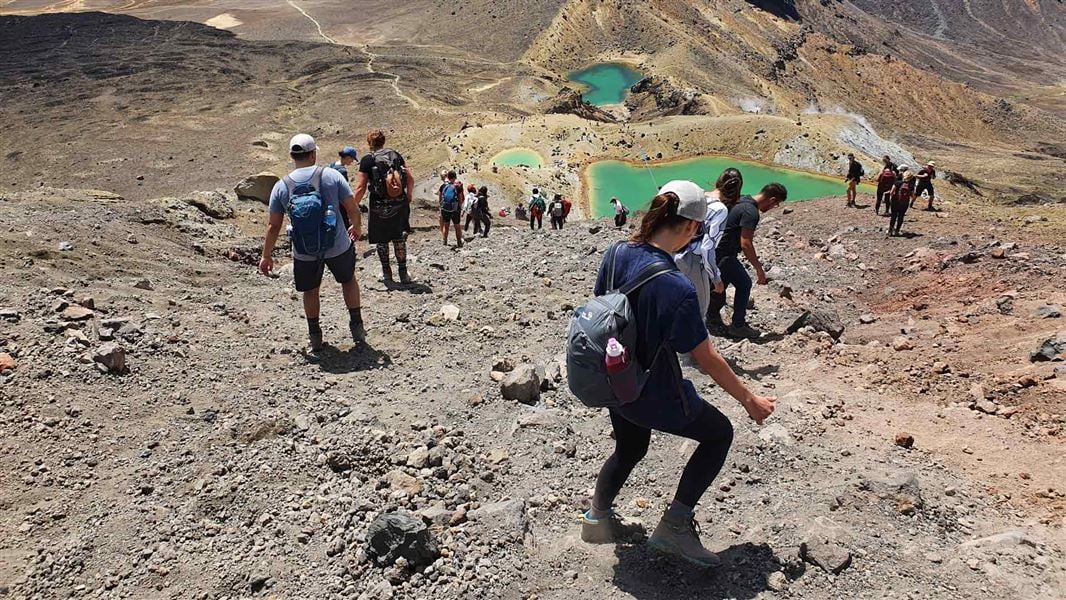
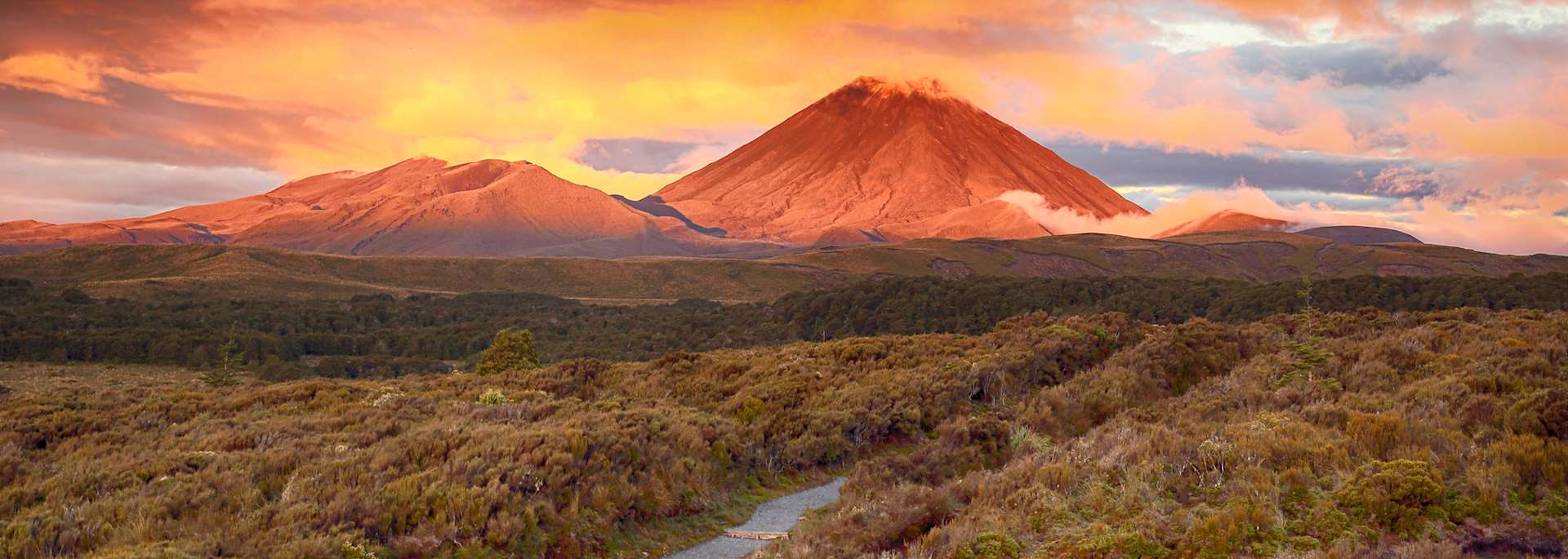
Tongariro National Park holds particular significance as a site of ancestral connection. The volcanoes — Tongariro, Ngāuruhoe, and Ruapehu — are regarded by the Ngāti Tūwharetoa people as tupuna maunga, ancestral mountains, and it was the gift of Tongariro to the Crown by the paramount chief Horonuku Te Heuheu Tūkino IV in 1887 that created New Zealand's first national park. Walking the Tongariro Alpine Crossing, travellers move through a landscape that is simultaneously a world-class adventure experience and a place of profound cultural and spiritual importance.
Tikanga for Visitors
A few practical considerations help visitors engage respectfully. Remove your shoes when entering a wharenui — a meeting house — unless specifically told otherwise. Do not sit on tables, as this is considered disrespectful in Māori protocol. Ask permission before photographing people or taonga — cultural treasures — and accept that some items and some spaces may not be available for photography at all. Do not touch taonga displayed in cultural contexts unless invited to do so. And when food is offered as part of a formal welcome, it should be accepted: refusing hospitality is understood as a rejection of the relationship being offered. These are not onerous requirements; they are simply the basic courtesies that any respectful guest would extend in someone else's home.
Every Elite New Zealand experience is arranged exclusively for your group. No shared vehicles, no group schedules — just your journey, your way.
Begin Your Enquiry